Touring the Bolivian Salt Flats: May 10 -14

Now that we were in Tupiza after our long walk, we needed to figure out how to get out of Tupiza to see some of Bolivia’s amazing landscapes. Tupiza is the jumping off point for tours to the far southwest of the country to see the world’s largest salt flat, mountain moonscape, and colorful lakes.

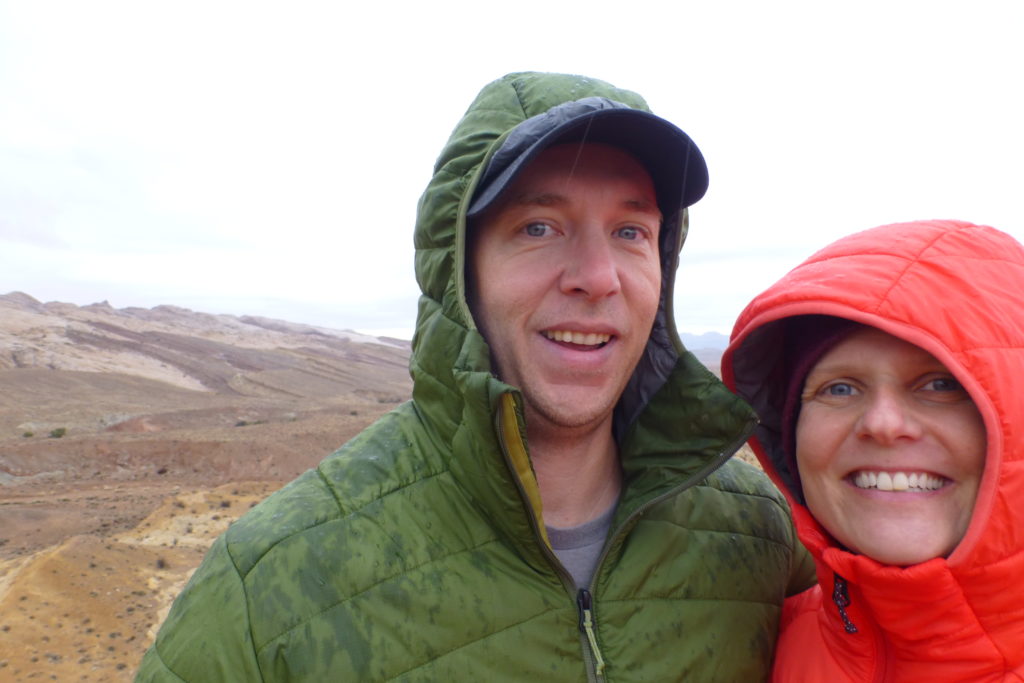
We signed up for a tour with the promise of the tour company that they could get the jeeps out of town regardless of the roadblock situation. So on the morning of May 10th, we piled into the jeep to start our 4 day tour. However, after 10 minutes on an old dirt road, we ran into a new blockade, and this was the last way to get out of Tupiza. So back to the hotel to wait out the strike for another day. The peace talks were underway, but we had no news of when the roads might open up. Mike and I were concerned that we were going to spend our whole month in Bolivia fighting roadblocks, so we made a list of options to get out of Bolivia earlier, including making the long walk back to Argentina!

The next morning, we got ready to go not knowing if we would get out of town or if we would prepare for our walk back to Argentina. Luckily, a compromise had been made, and we passed the blockades! We shared our jeep with another couple, Jens from Germany and Doris from Switzerland, and it was great to become friends with them.

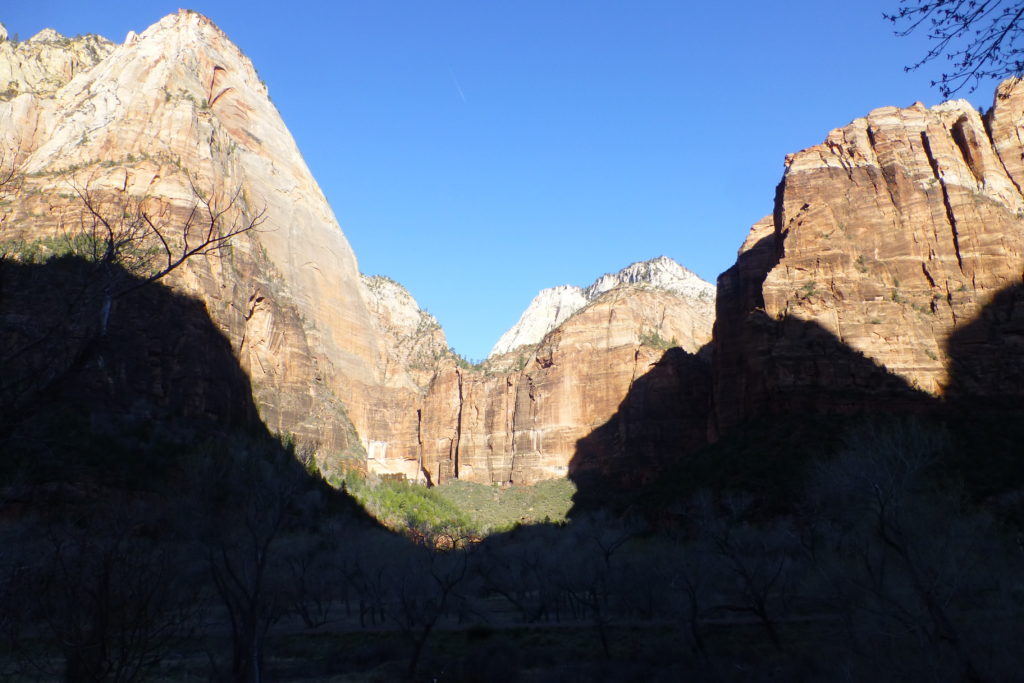
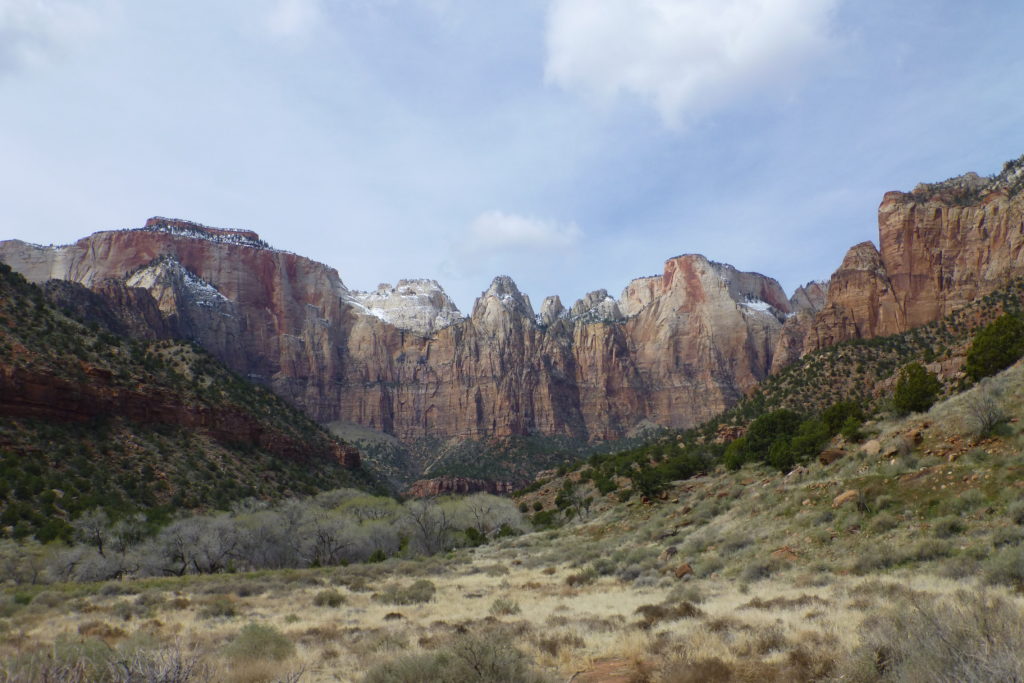
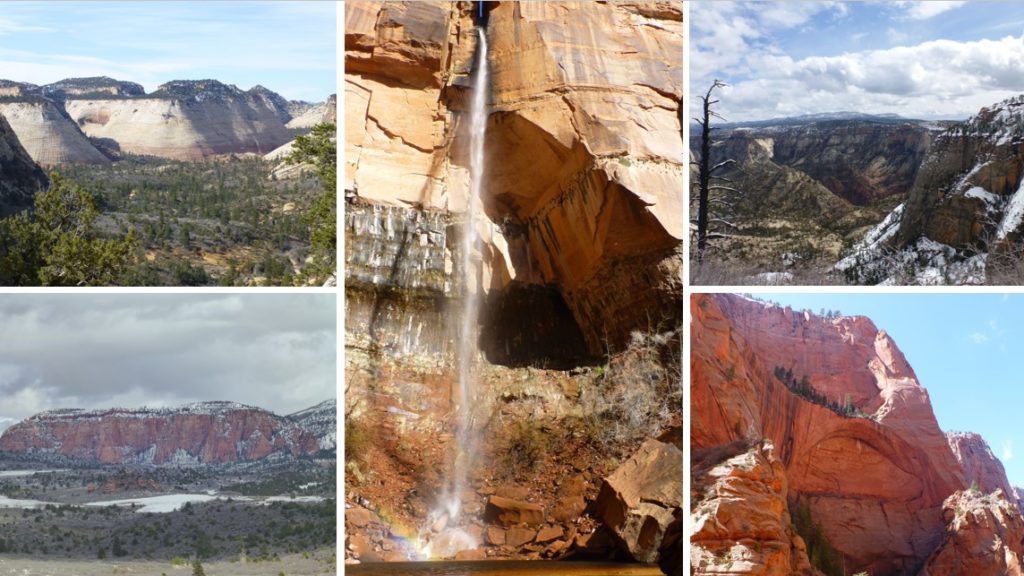
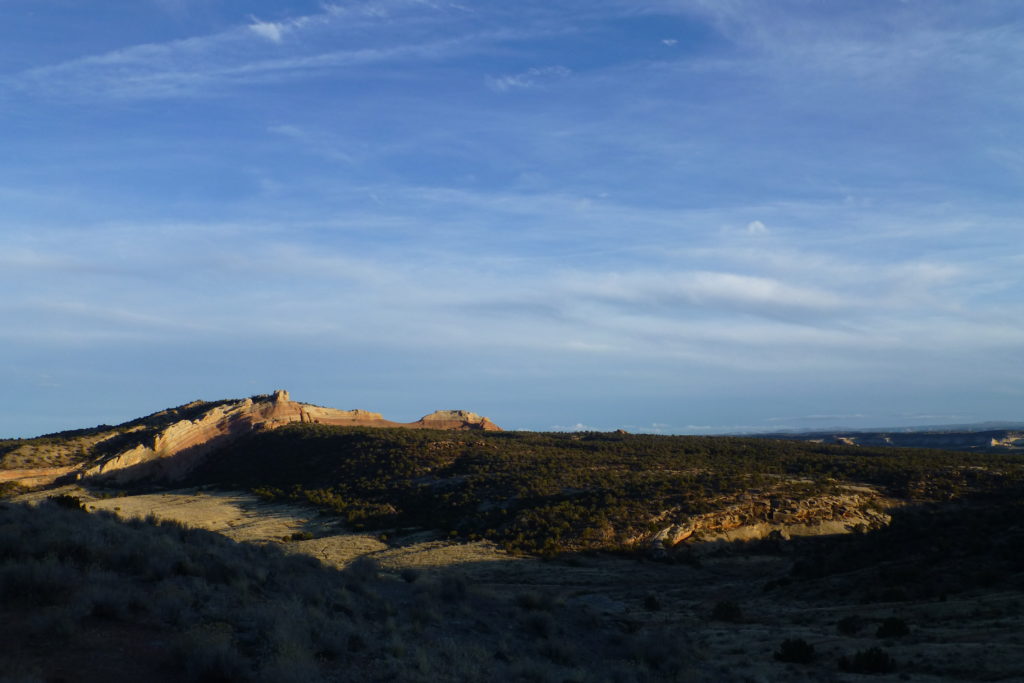
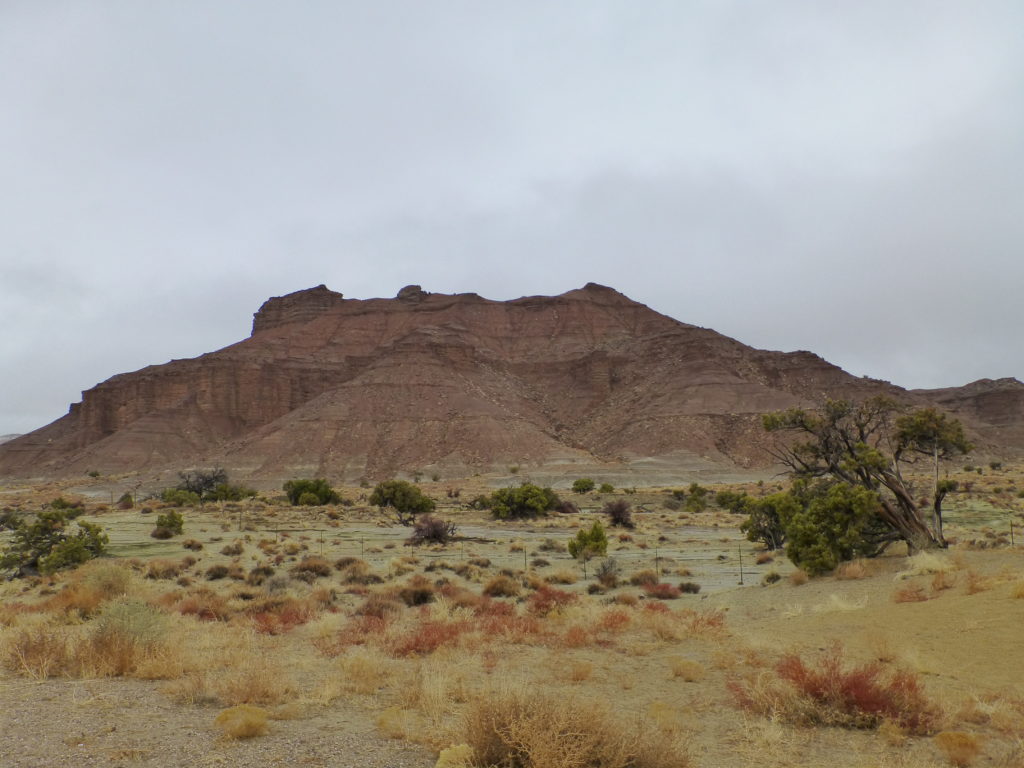
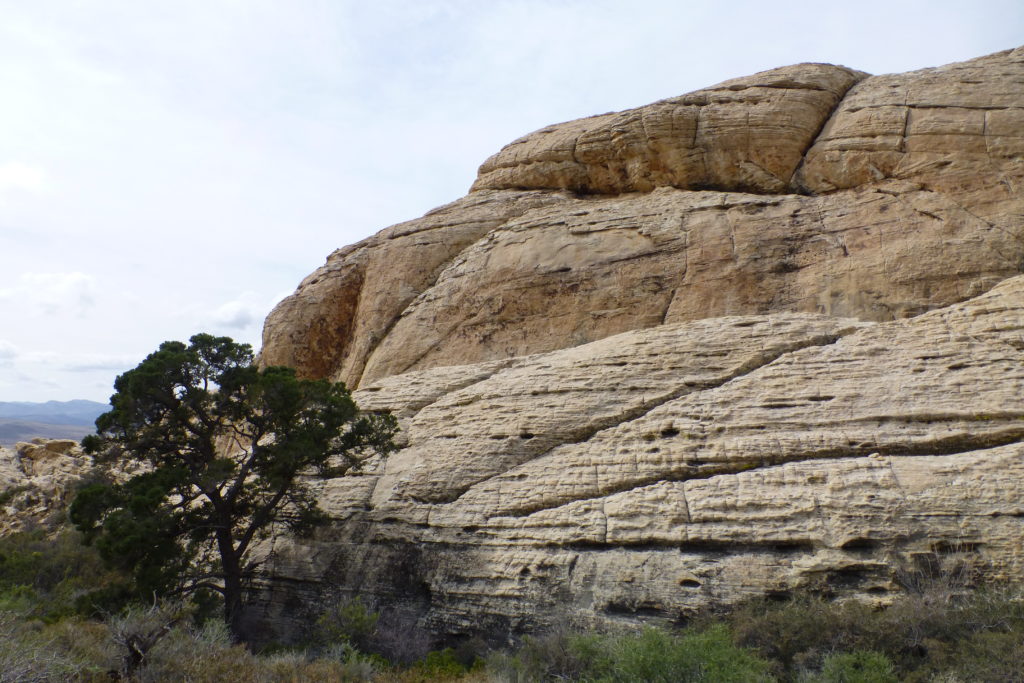
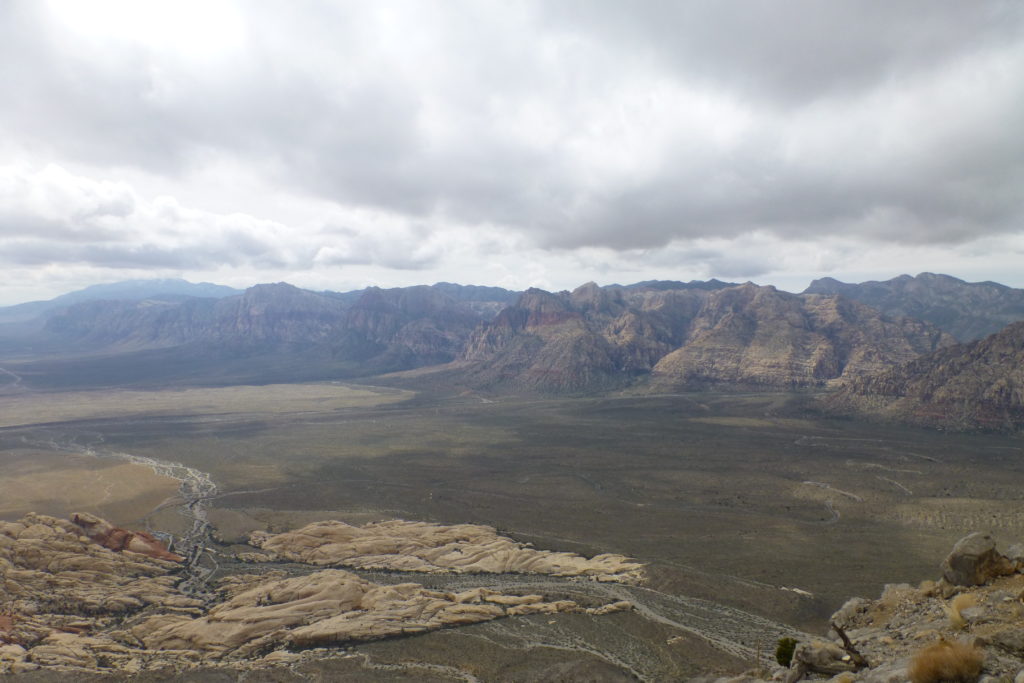
Our tour started with a long, steep ascent out of town with amazing views of the sandstone mountains formed by rain and wind. The views down the valley were awesome, and the reds were so brilliant. As we continued our drive, we went through llama grazing country and a few tiny villages. The houses in the villages were made of mud bricks with a straw/mud roof. We also saw wild llama, vicunas, which are much smaller, and their fur is less shaggy.  The domestic llamas were decorated with earrings which made them even funnier looking!


By afternoon, we had reached 4800m and had amazing views of snow capped mountains in the distance. The main highlight was the abandoned village of San Antonio with Volcan Uturuncu (6008m) towering in the background. The buildings were made of stone, and it was fun to figure out what each of the buildings were used for once upon a time.


We spent the night in Quetena Chico at 5000 m. It was so high that rolling over in bed made my heart beat faster! Mike and I were both sick with colds, so it was an early night to bed after listening to the local village children sing.

Day 2 was the colorful lakes day! The landscape changed from tufts of grass to bare rock and sand. The landscape made me think that we were on the moon. We were within 25 km of Chile. Laguna Verde is an aquamarine lake with Volcan Licancabur (5930m) in the background. The lake’s color comes from minerals that are carried by the wind. Doris and Jens taught us how to make jumping pictures, so we had fun trying to get the timing right and not get too out of breath! 


After lunch, Mike enjoyed the natural hot springs looking over the small salt plain of Salar de Chalviri. I didn’t want to get wet since I was sick, but it sure seemed relaxing. There were also a few mud pools and fumaroles to check out.

The real highlight of the day was Laguna Colorado, a bright adobe-red lake with flamingos. The red color is due to algae, and there were also small islands of white due to the formation of borax. The flamingos prefer this lake to many of the others in this area because it is the warmest in temperature. There were many baby flamingos, which were white and brown colored, in this lake too. It was so beautiful, but really, really cold too!


The third day of our tour continued with barren landscapes with little vegetation. There were some really interesting rock formations that were carved out by the high winds. They made for fun pictures!

We also stopped at several lakes to take pictures of the beautiful scenery. The lakes were packed with flamingos. They are so graceful, and it is really neat to watch them take off and land as their skinny legs skim the water.  It was also fun to watch them use their beaks to hoe and scoop up food. Their beaks are big!

Our lunch stop had a magnificent view of Volcan Ollague which is an active volcano. We could see steam rising from its ridge line, and it reminded me of Mt. St. Helens, but on a much bigger scale! The volcano is right on the border of Chile.

In the afternoon, we crossed Salar de Chiguana, which is a small salt plain that was originally part of the same pre-historic salt lake as Salar de Uyuni. It was so windy that we couldn’t see anything, so it was a low-key afternoon.

Our hotel was right on the edge of the Salar de Uyuni and was actually made of salt. The floors were large salt grains, the walls were covered in salt, and even the light fixtures were decorated in salt! In the evening, we enjoyed talking to the occupants of the other jeep that was traveling with us, including Tina from Sydney, Claire from Switzerland, and Eric and Delphine from France. We played global Uno incorporating many different house rules, and it got to be rowdy and really fun.

 Salar de Uyuni was the highlight of our last day on the tour, and I am glad that it was last because it was incredible! The salt flat is the largest in the world and occupies 12,000 square kilometers. The salt is 130 m deep with a salt lake underneath. In every direction all you see is white with rocky mountains as the backdrop.

To get the most out of the day, we woke up early to watch the sunrise over the salt plain. It was a gorgeous sunrise of pink, purple, orange and yellow. Mike and I practiced a little yoga to help us keep warm while taking in the beautiful scene.

Once the sun was up, it was time to take funny photos. Since there is just flat white for as far as you can see, it is possible to make tricky photos. It was a blast with the whole group setting up and taking the pictures. Doris and Jens were super creative, and it was fun to get everyone involved in group photos! It was hard work setting up the shots, especially at 3600m!

 After our photo session, we drove across the flats. The salt forms hexagonal shapes, which helps add some dimension. As the sun rose higher, the whiter and more brilliant the salt became resulting in the background mountains seeming to float off the ground. It was pretty awesome.

We arrived in Uyuni in the afternoon to discover all the roadblocks were finished, so we could now continue our exploration of Bolivia! It was an amazing four days with breathtaking scenery everyday and new friendships from around the world. 

Posted in Bolivia | Leave a comment

When Bolivia Is On Strike, It´s Good to Find Some Hippies–May 8-9

After our frustrating attempt to get a Bolivian visa in Salta last week, gaining entrance at the border proved to be much easier than we had expected, but we were not to know at the time that the border was only the first of much larger challenges in exploring Bolivia.  We left Argentina early on Tuesday, May 8, and rode the bus for about 4 hours to the Argentine border town of La Quiaca.  After exiting in a matter of minutes, we filled out the visa application, submitted numerous American bills for inspection before gaining the amount of crisp, perfect dollars necessary to purchase our stamps, and were walking into Villazon, Bolivia within the hour.  Our hopes of an easy day, however, were utterly naïve.

Our first order of business was to locate an ATM in order to draw as much cash as we could because ATM’s are few and far between in Bolivia, and working ATM’s are even more rare.  Having accomplished that, we headed to the bus station in order to buy tickets to Tupiza, the town from which we could arrange a tour of the Salt Plains, a series of stark white plains and beautiful lagoons that are one of the most highly recommended places we’ve heard about from other travellers who’ve toured Bolivia.  Upon reaching the bus station, we thought that we would have no problem as over 10 companies advertised buses to Tupiza; however, each time we approached a window inquiring, “Tiene unos boletos a Tupiza por esta tarde,” we were always met with a negative shake of the head and a thumb pointing towards the next window.  Eventually, we ran out of windows and walked, frustrated and confused, across the street, but only international bus companies were located there.  We probably should have loaded our bags onto one of those buses or walked right back into Argentina right then and there.

I ended up being able to explain to one of the workers at the international bus companies that no one would sell us a ticket to Tupiza, so he directed us to the coach office down the street.  We found that we could pay for a shared taxi with several other people and get halfway to Tupiza, but that some sort of roadblock would keep the driver from going past.  We would have to walk through it and then pick up a different cab on the other side.  Many of the provinces in Argentina have border checks that taxis cannot go through without a special license, so we assumed that something similar must be occurring here.  In any case, we hopped in with a bunch of Bolivians who seemed perfectly fine with this method and were soon on our way up the highway.

Once we got to the roadblock, maybe 40 or 50 kilometers into the 90 kilometer trip to Tupiza, it was clear that the problem was not a border control but a political protest. Rocks and thorny branches were strewn across the road, and many people were camped out beside the blockade.  A group of young men playing a makeshift game of futsol on the road behind everyone else seemed to be the strike enforcers that would keep people from passing.  Another cab full of tourists were opting to return to the border because no one was willing to give them a ride on the other side since there would be more blockades up the road.  We thought about turning back as well, but both the driver and a nice Bolivian couple about our age who had been in our cab thought that we could probably get a ride after an hour or two of walking; we just needed to get past another roadblock or two.  After a few minutes of deliberating, Sarah and I agreed that we should give it a go, joining up with our new Bolivian friends, Carlos and his wife, Leni.

Although we were at around 3,400 m above sea level, it was still pretty darn hot, and the four of us were sweating as we climbed up and down the rolling hills of the dessert highway that offered little shade.  Fairly often, we would meet up with Bolivians carrying heavy loads in their arms and chewing coca leaves while moving in the opposite direction; Carlos, who spoke about as much English as I speak Spanish, would stop and ask them how long it might take us before we could find a ride before translating for us…answers varied between two and five hours.  Most people agreed that we had to pass four blockades, but no one knew how far they spanned.

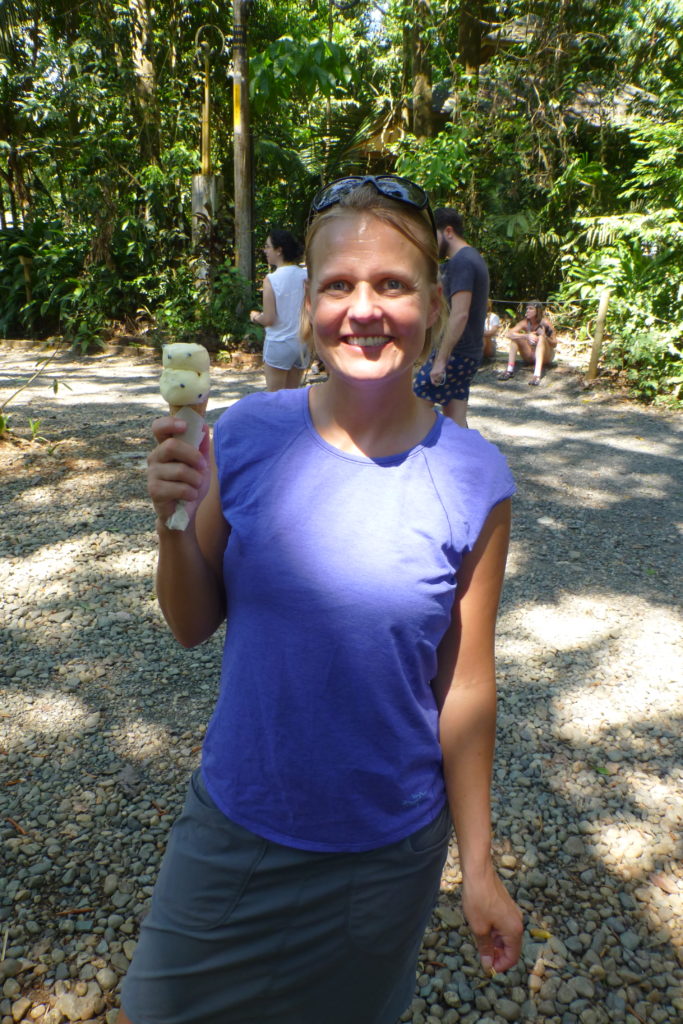
On and on we went, trekking down the silent highway and lugging our heavy bags.  We rationed our water and both wished that we had eaten more than a banana and a few crackers earlier in the day.  After about an hour, we hit the next blockade, where Sarah was actually able to buy helados (ice cream) from a bicycle vendor on the side of the road.  The next blockade was about another hour down the road, and this one clearly had a group of enforcers who had stopped a motorcycle that was trying to get through.  As we walked, I talked with Carlos a bit, and he told me that people were striking mostly for higher pay but also for better medical options and education.  I was glad, though, that they harbored no ill will towards people trying to walk across the lines.

The guy on the motorcycle managed to get through the blockade, and we found him stopped a little ways down the road.  He agreed to take us two at a time up to the next town for 10 Bolivianos (about $1.50) each.  The girls rode off while Carlos and I continued walking up the road.  About 20 minutes later, the guy returned and took us six km up the road, letting us off a few minutes before the next blockade.  I can’t say that riding on the back of a motorcycle with two other guys while wearing 50 pounds on my bike was fun, but I was thankful for the time that we saved.

By this time, both Sarah and I were doing plenty of second-guessing our decision to continue after the first blockade.  We began to discuss some different options we had, depending on whether we could get to Tupiza; there was always the option to make the long walk back to the border the next day and head back to Argentina before making our way to Chile or flying north.  In any case, neither one of us felt like spending the next month walking the highways of Bolivia.

Our trek took us another two and a half hours, for a total of five hours on foot that day, and we were both tired, hungry, sore, and sick with head colds…not to mention thirsty.  We came upon a school and stopped off to inquire about getting some water before continuing towards Tupiza, still hoping to reach the last roadblock and find a ride to town before dark.  The last person we had talked to, though, said that the highway was totally blocked until morning.

To our surprise, a large group of hippies…15 young French, Argentine, and Peruvian travelers decked out like flower children…had arranged to stay at the school for the night and purchase some local food for dinner.  They invited us to join them, and the local teacher encouraged us to stay as well.  Tupiza was still 16 km away, and it was getting pretty late; we were both done in after a physically and emotionally trying day and decided that the traveling hippies were our best bet, so we said goodbye to Carlos and Leni, who continued up the way.

I know that I have at times been known to rail against the hippies of today, mostly because I think that they are mainly posers who think the clothes look cool (they’re wrong) and enjoy rebelling against nothing rather than actually standing for something that they believe in (other than stupid looking clothes and rebellion for the sake of nothing).  However, the 15 people who took us in were amazing, and I hereby promise never again to utter the phrase, “damn hippies,” or “friggin’ cheese stealers” again.  J  Having met only recently for the most part, they realized that this would be a challenging journey and so banded together to make things easier and more fun.  They graciously invited us in and made every effort to include us despite the fact they we were by far the most limited in speaking Spanish of anyone.  Several of the village children were hanging around, and the hippies were tireless in entertaining them with juggling and music.  Most of them were in poor shape and had been walking for two days with shoes better suited for the mall than the highway, but their spirits were indomitable despite their blistered feet.  We did our best to pitch in with preparing dinner before laying out our sleeping bags in the school and watching the world go by before dinner.  One of the hippies invited us to try the national Argentine obsession of mate (an herbal tea), which was a first for us, and several of them began to play their guitars and even a cello.


After sharing a borrowed plate of rice, maize, potatoes, and onions, both Sarah and I felt a lot better, and being with so many positive people helped raise our spirits.  We did our best to keep up with the school teacher’s lessons on Bolivian foods and places to visit, and then we slumped exhausted into our sleeping bags on the dusty school floor, but not before everyone passed the hat and did right by our generous Bolivian hosts.

Wednesday the 9th marked 13 months since our wedding, and we never would have predicted that we would start it by waking up next to 15 hippies sprawled out in the single room of a school house in Bolivia, but then again, this year has been anything but an exercise in normality.  Sarah’s cold was getting worse, and I had almost totally lost my voice after being sick myself the past week, and so we said goodbye to the hippies and hit the fresh air as soon as possible.  It’s a cliché, but this has got to be one of those things we will look back on and laugh about someday.

We walked that morning for another four or five miles along the highway, finally able to appreciate the beauty of the land around us.  The morning sun is always amazing as it lights up the mountains in glowing red, and we later learned that this portion of the highway is actually considered a highlight in itself.  The road was filled with Bolivian families making the long trek that we had undertaken the day before, and we would greet each other in Spanish and often receive toothless smiles in return for our own.


When we were nearly to the final roadblock, the hippies came flying by…all 15 of them loaded in the back of a flat-bed cattle truck that they had happened upon and convinced to take them as far as it could.  We caught them right at the final roadblock, only to realize that they were a large enough group to fill up the two trucks waiting a few 100 meters down the road.  So it was that Sarah and I passed the final blockade at a virtual sprint with our giant bags bouncing up and down on our shoulders while the hippies banged on the windows of the trucks trying to get them to stop while also cheering us on in at least two languages.  Finally, we reached the tailgate of the truck and jumped on right before the driver finally stopped and helped us find a place in the truck.  As we rode the final 10 km into Tupiza at 8:00 in the morning, all I could think was, “damn, I’m glad we met those hippies”!

PS: Bolivia is no longer on strike, and Sarah and I are doing fine.

Posted in Bolivia | 1 Comment

Tilcara and the Painted Hills–May 5-7

By the time that we left Cafayete, we had been in South America for 40 days and had a really nice taste of Argentina and Patagonian Chile, but both Sarah and I agreed that it was time to make our way north to Bolivia.  As we traveled through the small high dessert mountain towns of Northern Argentina, we noticed a real change in the people and the land, and it was becoming clear that we were moving into a place that felt less European and more like what we expected from South America.

After leaving Cafayete, we returned to Salta for a few hours before catching a bus up to the small town of Tilcara.  Sarah jokingly suggested that we pay a visit to Salta’s Bolivian consulate during our stopover so that we could reminisce the good times we’d had with them earlier that week, but I thought it might be better to just to have lunch in the plaza.  Luckily, we also had time to procure malaria pills for when we get to the Amazon and Skittles for the bus–we argued over which was more important, but I will let you try to figure out who took each side.

Tilcara is a charming little town of maybe 4500 people set in the high dessert at 2461 meters above sea level; almost all the buildings are either brick or adobe with cactus beams in the ceiling, and the buildings seem to melt into the boulders and red soil as they rise up the steep hillsides outside town.  Even though it is hot and dusty, many of the locals wear their llama wool sweaters with their boots while protecting their sun-worn faces under the shade of wide flat-brimmed hats (the women wear skirts and derby hats).  The people here are much darker and look more like they come from native South American heritages than the Italian descendants of much of Argentina.  It has a reputation for being overly touristy, but not many people were in Tilcara now, and we really enjoyed walking among the soft-spoken but friendly locals.

Of course, we also did touristy things, though.  The main attraction in the town of Tilcara itself is the Pucara, set on a hillside right at the edge of town.  Like Los Quilmes, the ruins we had seen earlier in the week, the Pucara was an ancient city from Pre-Columbian times.  It was actually one of several of such cities in the area between the 11th and 15th centuries.  At it’s peak, it may have held 1800 residents, so it was much smaller than Los Quilmes; still, though, I think it is interesting that in 2012, the city of Tilcara is not much larger. Although the Pucara was not a walled city, it was set high above the valley and would have been both protected by the surrounding mountains and also a good viewpoint from which oncoming threats could be spotted well in advance of attacks.  According to a brochure done by the University of Buenos Aires, the ancient Tilcaras who lived in the Pucara farmed basic crops that could withstand the climate (maize, potatoes, pumpkins, lentils) and herded llamas, their main source of food and wool.  Eventually, they were conquered for a short time by the Inca, but the Spanish soon took the city and enslaved the residents before basically eradicating them through disease and the brutality of enslavement.

The ruins today are a set of nearly identical small rock buildings with thick walls and flat roofs made of clay and straw.  They had no windows and very narrow doorways, and apparently Sarah would have played center for their basketball team.  The ceilings, a combination of cactus beams and bright reeds looked suspiciously similar to the modern ceilings in Tilcara, and we think that they must have been one of the “liberties” that Lonely Planet describes the 1950’s renovators as having taken in restoring the ruins.  Regardless, the thing that stood out to us was how well-protected the people would have been from the baking afternoon sun and the evening winds that brought with them the dust.  The largest building, nicknamed “the church,” would have served as a communal ceremonial building and featured an altar and a large courtyard.  The city was interesting, though not nearly as vast or well-organized as Los Quilmes, and we also enjoyed some nice views of the beautiful multi-colored rocky mountains and the valley below.  It was a pretty nice place to spend half a day before taking a siesta that afternoon in an effort to rid ourselves of the nagging colds we have been passing back and forth; of the six weeks we’ve been here, I don’t think three days have passed in a row where we both were entirely healthy.

We had rented a tiny cabin from one of the hostels in town, so we had a little home we could relax in that afternoon.  It was very basic, and sort of smelled like a big clod of dirt we might have taken from 3 feet under the ground, but we had our own little kitchen and a bathroom, with propane tanks for cooking and heating the shower.  There were over a dozen wool blankets as well, which made very good foot stools when lying in bed.  In any case, it was really nice to play house there for a couple of days, even though it also made us anxious to get back to a real place that we can call home.  That evening, I continued my last ditch effort to consume every type of local cuisine by trying out the delicious humita (which I guess is actually a Bolivian dish), a type of cornmeal tamale without meat, and a big dish of steaming locro, a stew made of beef or llama, maize dumplings, corn, chilies, and beans; the gauchos up here go crazy for the stuff, and I thought it was pretty good, too.

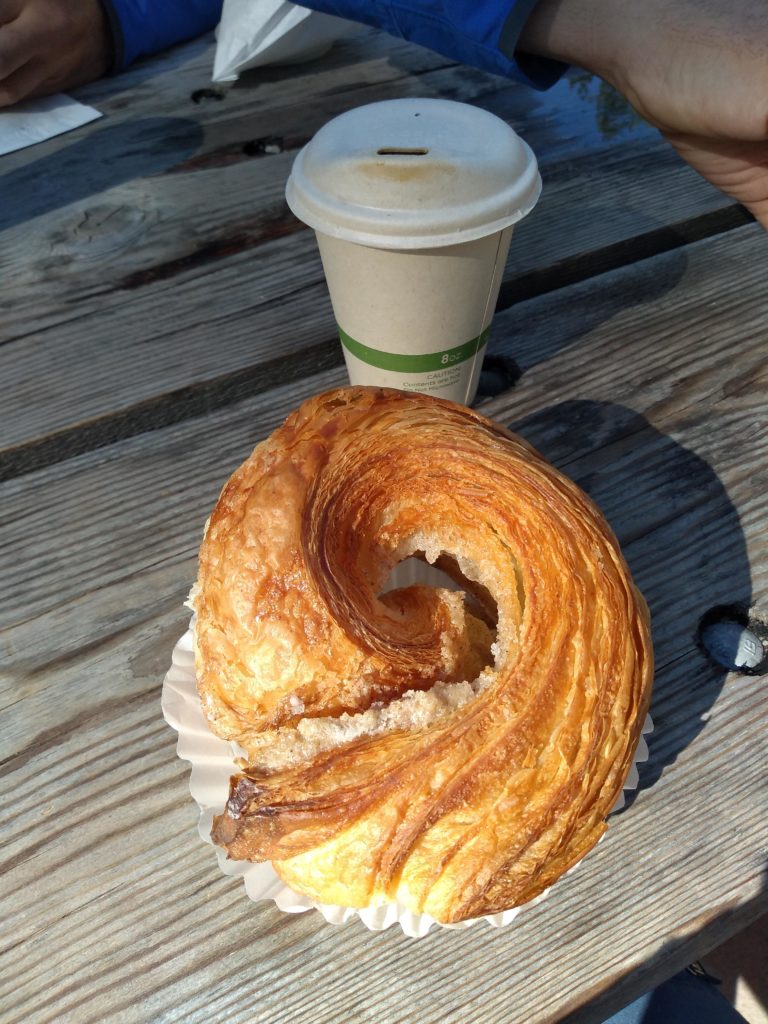
The following day, we woke up very early to catch a local bus to the nearby town of Pumamarca, a village of only 500 people.  This little spot held a very large attraction, however, El Cerro de los Siete Colores (The Hill of Seven Colors).  Because the colors are supposed to be most brilliant in the strong morning sun, we had jumped on the earliest bus that we could find, and we got to the town just in time to have a cup of coffee and some croissants fresh out of the oven while the sun finished rising over the hills before setting off on the hour long hike through the Paseo de los Colorado, a road that runs a loop through the front side of the painted hills.

At first, we saw mainly the bright red clay-like rock that juts out of most of the hills in Northwest Argentina, but soon we could also see layers of orange, brown, purple, and green–I’m pretty sure I only identified five colors, but not everyone works on Mondays, so I thought maybe the other two colors had the day off.  The layers of sediment became more pronounced in their different shades as the sun rose higher, and we took our time strolling along the path, enjoying the changing colors and also the peaceful atmosphere of solitude before heading back down to the village to check out the market.  There were many pretty wool garments, ceramics, and silver jewelry at the market, but none passed the “do you want to carry that thing for two more months in your already gaping bag” test.  Before heading back to Tilcara, we crossed the highway and scrambled up a hill to get some pictures of the Hill of Seven Colors from a broader view.  What a gorgeous morning!

 We spent what we hoped was our final afternoon (we still don’t have visas, and no one seems to know for sure what the deal is at the border) enjoying some Cafayete wine while trying to work out an itinerary for Bolivia.  The sun was out, and we had a nice view of the town below us; it was a nice ending to celebrate 43 vigorous days of travel through some of the most breathtaking landscapes we’ve seen throughout our travels…I would say that only the Himilaya and the South island of New Zealand could compare.  Bolivia, you have some big shoes to fill!

Posted in Argentina | 1 Comment

Getting North and Embracing the Culture in Argentina: Cordoba, Salta and Cafayate (April 26 – May 4)

Feeling refreshed after several days in the countryside, it was time for us to move on to visit a few of Argentina’s northern cities. On April 26, we said goodbye to our rock dog friend and traveled to Mendoza to catch an overnight bus to Cordoba. However, we had several hours to kill before our 10 PM bus, so what better way than to wine taste? We found a wine shop that offered tasting flights and enjoyed tasting some more of the area’s fabulous wines.

Cordoba is Argentina’s second largest city and has seven universities. It is well known for its historic churches and Jesuit square. After our early morning arrival, we set out to explore the city’s center. Plazas are a staple in every Argentine city, and Cordoba’s was beautiful with a big statue of San Martin in the center and the beautiful Cordoba cathedral dominating the square. The cathedral took 200 years to complete after starting in 1577 and is a mixture of Jesuit and Franciscan design.


Cordoba’s Manzana Jesuitica is an entire block of Jesuit buildings with pedestrian-only streets. The buildings were pretty, and since it was Friday there were musicians playing and lots of people out and about. The Iglesia de la Compania de Jesus was the church on this block and was built in 1671. The designer was a boat builder, so the inside of the church’s ceiling looked like an upside down boat’s hull. It was made of cedar, so the church had a pleasant smell. The altarpiece was also carved cedar with life-size figures of saints. Behind the cathedral, was a small chapel, Capilla Domestica, which was built in 1644. The ceiling was made of cowhide stretched out and painted with pigments made of bones. It was a beautiful design.


We continued our tour of Cordoba’s churches by visiting Parroquia Sagrado Corazon de Jesus de los Capuchinos (long name!). It was built in 1934 in a neo-gothic style. The outside is missing a steeple in order to symbolize human imperfection, and there are sculptures of Atlas holding up saints to symbolize him holding up the sins of the world.

Our last sight of the day was Palacio Ferrerya, a 1914 mansion, that housed an art museum. There were a few pretty pieces of impressionist works, but for the most part it was modern art, which doesn’t intrigue Mike nor I. So instead, I looked at the pretty architecture of the building.

The next day, we hopped a mini-bus to Alta Gracia. Alta Gracia is a small city 30 minutes from Cordoba and is home to a Jesuit church and Che Guevara’s childhood home. We toured the Jesuit museum which was originally the living and working space of the compound built in 1643. Each room had some historical pieces of furniture and a nice explanation of the settlement’s history. Unfortunately, the interior of the church was closed.


The Che Guevara museum was informative with lots of childhood pictures throughout the house. One of the displays was his old motorcycle and bicycle. There was a map of his travels through Latin America from each trip. Fidel Castrol visited the museum in 2006 and there were lots of pictures of his visit displayed. Neither of us are particularly impressed by his legend, but it was still a unique place to visit.

 Back in Salta, we spent the evening in the artisan neighborhood of Guemes at their weekend art fair. There were many stalls of varied crafts. We both really liked the colorful, stone sculpted clocks, but neither of us were up to carrying it around for our remaining two months. The knitwear was also fabulous and made out of llama wool. It was fun to look around .

Sundays in an Argentine city are quiet, so quiet you wonder if anyone lives or works there. All of the shops are closed all day with the exception of a few snack stores and some of the restaurants are closed too. So, we had an entire Sunday to spend in Cordoba before a night bus to Salta. We spent the time in catching up in our journals in cafes and wandering the streets. The one museum that was open was Museo Muncipal de Bellas Artes Dr. Genaro Perez. The building was a beautiful mansion with gorgeous wood floors and fireplaces. In back there was a lovely sunroom with multi-colored glass. I had way more interest in the building than the modern art pieces, which included a huge sandbox and a florescent light display which flicked on and off symbolizing the human brain. Mike and I didn’t get it, but at least we did something for our last day in Cordoba!


I woke up to our descent into Salta which is located in a valley full of lush, green trees surrounded by tall mountains. Our first destination was the Bolivian embassy to get our visas, but it was closed, and we later found out it would be closed until Wednesday due to Labor Day on May 1st. Strike one with our Bolivian visa. Since it was a holiday, Salta’s main square and pedestrian shopping streets were packed. It added a nice sense of vibrancy, especially after the desolate roads of Cordoba the day prior.

Our church tour continued in Salta with the Inlgesia San Francisco, which had a very colorful façade and a slim bell tower. The inside had beautiful stain glass windows and a pretty painted ceiling. Salta’s main cathedral towers in pink over the town square. It was built in 1878 and had a very ornate, baroque altarpiece.

 We were churched out so we headed to the Museo de Arqueologia de Alta Montana (MAAM). The museum was built to display Incan artifacts and mummies that were found in 1999 on nearby Mt. Llullaillaco, a 6,739 m peak. The Inca’s used to perform human sacrifices to please the gods and usually preformed them on high peaks, which the Inca’s considered sacred. Three bodies and many burial art pieces were found well-preserved from the elements due to the elevation (6700m). The children were from noble families and taken to Cuzco (the sacred city) for a festival and symbolic marriage uniting the different regions of the Inca empire. Then they pilgrimaged to the peak were the children were fed an alcoholic maize drink to make them fall asleep, and then they were put to their final resting place.

The 3 children were found in a sitting position, and all of their clothes are perfectly preserved. The boy (age 7) was on display, so we could see his white feather headdress. It was remarkable how well he was preserved as he just looked like he was sleeping. The other 2 children were girls and were not on display but they did have pictures. They were named “girl of lightening” (age 6 and at some point struck by lighting) and “the maiden” (age 15).

Small dolls with gold and silver faces were buried next to the children and also small rock carved llamas. They were so intricate and beautiful. I really enjoyed this museum and am looking forward to our continued travel through the Incan empire for the remainder of our trip.

Labor Day (May 1st) was a restful day for Mike and I as nothing was open in the city. Our B&B had an amazing breakfast and a very comfortable room to spend our day catching up on journals and emails. We also called our parents, and it was nice to get the news from home and tell a few stories. I caught up on some TV action, including my favorite show, Grey’s Anatomy. They even had a few episodes from this season! So really, we didn’t do much, but it was a nice treat to take it easy for the day.

Our next stop was Cafayate, a small town 4 hours south of Salta. We had delayed traveling there by 1 day due to Labor day so that we could get our Bolivian visas, so our first task of the day was the Bolivian consulate. We arrived, and it was busy. We waited at the counter, and the women ignored us and helped 2 other people who came in after us. Finally, a lady helped us and took our paper work, but a few minutes later our paperwork was returned, and we were told that they only could help Bolivian citizens! Strike 2 for our Bolivian visa.

Our 4 hour bus ride took us through the breathtaking Quebrada de Cafayate. It was a valley with brilliant red hillsides on each side of us. The town of Cafayete was quaint with a lively town square and quiet streets as most of the locals rode bicycles. The town is known for 2 things… amazing wine and scenery. Sounded like the perfect way to spend a few days after the bustle of city life.

On May 3rd, Mike and I rented bicycles to tour the nearby wineries. Cafayate is at 1700 m and claims to have the world’s highest vineyards. The hot days and cold nights intensify both the flavor and aromas of the wines. The local specialty is Torrentes, which is only grown in Argentina . It is knick named “the cheater wine” because it has a floral, sweet smell but dry flavor, and it has a high alcohol content so may take you by surprise after a few glasses.

Our favorite winery of the day was Bodega de las Nubes, which was set above town right at the edge of the mountains. It was one of the most scenic wineries and had some amazing wine. It is a boutique winery and only produces one bottle per vine!


After wine tasting, we returned our bikes but not before Mike realized he lost the key to the bike lock. Luckily, it was cheap to replace, but I now think that we have a 3 to 1 ratio of things lost between Mike and IJ

We finished the day by touring the wine museum. It was bad and was really more of an advertisement than a museum for the world’s best wine. The wine was good, but not that good! The walls were plastered with bad wine poetry; well, maybe it sounded better in Spanish. There were some interesting historical wine making tools, but overall a waste of our money.

Our hotel was run by a cute husband and wife with an adorable, curly head son. The rooms were set up around the family’s garden courtyard and was lovely. They were also amazing hosts as the next day we had a 6 AM bus to Quilmes, and the husband woke up at 5:30 to feed us breakfast!

Quilmes is a ruined city occupied by the indigenous people from 1000 to 1667. The city held off the Incas and, after 130 years of war, finally fell to the Spaniards. At its peak, the city housed 10,000 people. The city was built into the hillside with lookouts on both sides that had amazing views of the surrounding valley.

We arrived in the dark for the 5km walk from the highway to the ruins. The sunrise was fantastic with purples and pinks and setoff prettily by the cactus. We arrived at the ruins before it really opened, so we had the entire city to ourselves to explore. The house walls were stones and 3 feet thick. It was fun to look around, especially with views from above to see the entire complex. Throughout the ruins were the remains of the mortars used by the community. In the center was a large building that was the meeting place and religious center. Mike and I really had fun walking around by ourselves and figuring out what the buildings were used for and what daily life must have been like.

Mike and I spent the remainder of the day chilling out at our hotel. We indulged in a fancy dinner where Mike tried llama steak, and we shared a great bottle of local wine. Cafayate was one of our favorite places in Argentina. It had just the right mix of rural quiet but also a few things to do.

With less than 2 months to go on our trip abroad, we are still enjoying ourselves. We are feeling a bit run down and have both suffered colds and the flu in Argentina but we love the adventures and the day to day new things. We definitely enjoy the rural towns more than the big cities. The landscapes in Argentina have been magnificent, and we are excited to see more!

**Sorry there are not more pictures… the connection is really slow and I have spent 3 hours trying to get these pictures uploaded!


Posted in Argentina | 1 Comment

Mendoza and Uspallata: Wine Country and the Andes–April 20-25

First, I apologize for such a generic title; I have  experienced a bit of writer’s block the past few days, so creativity is a little low here.  The days we spent in this area, on the other hand, were anything but boring.  After heading north from Patagonia and the Lakes District, we had arrived in Andes country and planned to spend a day wine tasting in Mendoza before leaving the cities behind for some of the most breathtaking mountainous country we’ve seen.  Not even a minor plague along the way could keep us from having fun.

Our bus ride from Bariloche to Mendoza was a mere 13 hours, almost a sprint after the 28 hours it had taken to get to Bariloche a few day earlier.  It was one of the more interesting bus rides we’d had in a little while; for starters, we played bingo as entertainment after tea time, which was a strange phenomenom in itself, considering we were on a bus having tea and biscuits (filled with dulce de leche, which seems to run through Argentinans blood).  Oh, to add to the mystique of tea time on a bus, Guns’n'Roses music videos were playing on television while we sipped; nothing can match the glory of watching Slash’s guitar solo outside the church in “November Rain” while sipping a bit of herbal Yerbamate from a plastic dixie cup.

Mendoza was still pretty sleepy when we pulled in at around 8 AM.  During the night, I had developed some nausea and still wasn’t feeling too well, but we were excited to hit wine country anyway.  At least,  I no longer felt like throwing up, and the wineries would be closed the next day since it was Sunday, so we opted to soldier on.  Normally, we might have waited it out, but “Bed for Wine,” our hostel instantly rose to the top 3 dumps of our trip, and we didn’t feel like hanging around any longer than necessary.

Mendoza’s wine country is about an hour outside of the city, so we took the local bus out to the bike rental shop, Mr. Hugo’s.  Here, we got our bikes and a briefing from a kid who looked and sounded suspiciously like Pedro from Napoleon Dynamite, which is weird because Argentinans and Mexicans normally look nothing alike.  Anyway, Mr. Hugo is an affable old man who loves wine himself, and he poured us each a dixie cup of wine while we waited.  This was not the start that I was hoping for, but he kind of stuck around beaming at us, so I started the day with wine on an empty stomach after being sick in the night; luckily, Sarah had some crackers for me to coat my weak gullet a bit.  Anyway, I heard later that Mr. Hugo is pretty famous for seconds and thirds, so it was good that we slipped out on two bikes that would have been the pride of Peewee Herman and set out for the wineries before Mr. Hugo could do any more pre-lubing of our livers.

The ride out to the first winery was not exactly pleasant; Mendoza is very much about the wine itself and much less about beautiful wineries and settings.  It was really dusty, the headwind was brutal, and there was a lot of truck exhaust in the air, but at least the Andes could be seen vaguely in the distance.  Anyway, we were both glad to reach the first winery.

La Familia de Tommaso was one of the oldest wineries in Mendoza, having been around since the 1830′s.  They offered a brief tour of the winery, and although we didn’t really learn anything new, it was really cool to see the antique presses and giant old stone vats that they use to decorate the winery.  After the tour, we did a tasting of torrontes (a tasty white Argentinan wine), as well as a couple of malbecs and a cab.  The accompanying restaurant has good Italian food, so we had a nice, relaxing lunch before moving along.

The second winery we visited had only been open for a week; in fact, they didn’t even have a sign for their tasting room, which makes it difficult to locate for two gringos on Peewee Herman bikes.  Anyways, at least it was off of the main road, so our ride was quieter and also full of smiling Argentinans enjoying Saturday afternoon with their friends…or possibly enjoying watching two gringos on Peewee Herman bikes attempting to locate a brand new tasting room…one couldn’t be sure which was true.

Anyway, Florio specialized in sweet wines, and Sarah and I were interested in the tour because neither of us knew much about the differences that occur when making sweet wines.  Unfortunately, I began to focus more on my rising fever and trying to remain awake while the girl went on in Spanglish, and so I didn’t learn much.  Curiously, she kept talking about “burning the virgin masses,” and I tried to subtly tap Sarah on the shoulder to indicate that we might be in danger of unknowingly joining the occult when all we wanted was a taste of sweet wine, but she understood that the girl had intended to describe “boiling” instead of “burning.”  This made more sense in terms of grapes, so I decided to ride it out; the wine was pretty tasty, too, so it turned out to be a good risk.

The final winery we visited was both the best and the most interesting in terms of both wine and story.  During the “beer crisis,” a term that I can barely bring myself to type, many Argentinan wineries failed as the nation began to favor beer much more heavily than wine.  The winery that had once flourished on the land that Carinae now stood on had folded like many of its neighbors, but a former employee continued to maintain the grapes because of his love for wine.  Years later, a French couple who had no experience in the winemaking industry fell in love with Argentina, sold off their possessions back in France, and returned to open Carinae!  Their malbecs were some of the best we’ve had, mostly because they don’t mess with them but allow the fruit to dominate as it should.  We bought a bottle of a blend that the husband, who we met briefly after he arose from his nap, had secretly made for his wife for their anniversary.  It was a nice way to end the day.

Sarah probably could have managed another stop or two, but my fever was still coming and going, and my legs were starting to ache, so we rode back to Mr. Hugo’s, and I managed to dump my free wine into Sarah’s cup without him seeing.  Come to think of it, she must have been feeling pretty good about Mr. Hugo by the time we caught the bus back into Mendoza.  While I wouldn’t say we enjoyed the wine country out there, they certainly made good wine!

By the time we hit Mendoza, I was beginning to hate life…the flu is bad enough, but winetasting all day when it’s coming on is probably just plain stupid (although we all know, I would probably do it again).  Anyway, one last kick in my ass came about two blocks from the hostel when the box carrying our two bottles just collapsed…the girl at the new place hadn’t taped the bottom…and our lovely bottle of secret anniversary wine thundered to the ground and shattered into 500 pieces!  Luckily for whichever kid thought it was funny to do the Nelson laugh behind me, the pedestrian light had turned green, and he had slipped into the crowd by the time I turned around, dripping in crimson wine.

The next 24 hours need no description; I had a really bad case of the stomach flu, and Sarah was stuck in a tiny, disgusting room with me.  Luckily, she didn’t catch whatever bug I’d acquired, and she at least got to go out for a nice dinner on her own the following day.  We did manage to go to the bus station to get tickets out of Mendoza, but I couldn’t eat anything yet and promptly went back to bed after getting the tickets.  Needless to say, Mendoza was not my favorite place (even if I had been well, there didn’t seem like much to do there but shop and go to cafes, and I’m sure that Buenos Aires outdoes it at both).

Monday morning, we headed out to tiny Uspallata; I was happy to be feeling better, and we were both glad to be leaving the city…we’d spent over a week in Argentina’s urban world and were ready to get back out into the countryside.  Uspallata, a little mountain town in the Andes, proved to be just what we needed.

Our hostel was about 5 km outside of town on a beautiful ranch-like setting down below the rugged mountains and along the Rio Mendoza.  The Andes were not exactly what we had expected–in this region, there are far more red rocky mountains than towering snow-capped peaks–but they are strikingly gorgeous, sort of like Utah’s mountains but on a much grander scale.  We had a cozy, comortable double room there, and it felt like we were on a quick litttle mountain getaway, sort of funny to feel this way since we are 10 months into a world tour!  Anyway, after enduring the dungeonous Bed for Wine in Mendoza, Hostel Uspallata turned out to be one of our favorite spots.

After settling in, we rented bikes and rode into town on a beautiful old dirt road that traced the river, a bunch of horse ranches, and some lovely large poplar trees…all looming below the mountains.  The town itself wasn’t much, but oh, what a setting!  We grabbed some lunch and got equipped with some food for the next day, when we would be going to see Aconcagua.  We did notice, however, one strange thing in Uspallata:  a diner entitled The Tibet Cafe.  It turns out that this area was the actual setting for Seven Years in Tibet; apparently, this cafe has some movie props in it, but it was closed when we there.  Anyway, we rode back to the hostel, and I got in one more nap in hopes of getting back to 100% for the big day.  Luckily, I woke up feeling great, and the hostel’s mashed potato and milanesa (chicken-fried steak without the gravy) for some reason was like chicken soup for my soul…maybe, I just needed to eat after 3 days.

Aconcagua is very near the Chilean border, and we had to flag down a bus from outside the highway and ride about 90 kilometers through the mountains towards the border in order to get there.  We were joined by two others from our hostel, an American named Clay and a Swiss girl named Corrine (which is probably not how she spells her name).  The four of us got along really well, and we ended up spending the next day together too; it’s always nice to make some good new friends. Along the way, we passed some amazing scenery in its own right, particularly a series of brown towers called the Penitentes because of their resemblance to a group of giant hooded monks.  They call this “God’s Country,” but I am sparing y’all one of my infamous puns here.

Once in the park, we hiked about an hour in the shadows of Aconcagua, passing several viewpoints and pretty little lagoons.  Above us, the climbing routes to the 6962 m summit–the highest outside of the Himilaya–were clearly visible.  They looked very steep, and the standard route held much more appeal than the route that traversed directly below a humongous, crazy-steep ice wall.  The mountain, a snow-covered kingdom among the rocks, was much more majestic and pretty thans I had expected, and I began thinking of ways to return here for an attempt someday.

After enjoying a lovely lunch while gazing up at the mountain above us, we headed back out and walked down the highway to the miniscule town of Puente del Inca, which is basically a spot in the road.  Regardless, there is a very quirky attraction here:  a sulferic spring that runs through the rocks behind town has formed a giant, glowing orange stone bridge; there was formerly a spa hotel built on top of it that has since been destroyed by flooding, but the result is an alienesque blend of neon nature and civilization…we got some pretty crazy photos.  With a couple of hours to fill before flagging down a return bus, we shared a bottle of wine with Clay and Corrine.  We’d been blessed by bluebird weather, interesting friends, and one awesome mountain!

Our final day in Uspallata was spent on the back of a horse, although I think we both were surprised to be alive to tell the tale.  We had decided to stop in town the previous night instead of riding the bus all the way to the hostel; anyway, after enjoying a great sunset, we soon came upon an adorable black dog who had buried himself in a giant pile of leaves.  It was so cute that I had to grab a picture but upon getting within 2 feet of it, he suddenly turned into a maniacal, bloodthirsty titanic killer, and we ran for our lives.  That night at dinner, we told the story to Clay, who had actually fell nearly a victim to the same psycho ploy by the dog the night before.  South America definitely has the craziest canines in the world!

As I said, we rode horses into the mountains for our final day in Uspallata.  I did it mostly because I knew that it was something that Sarah was really hoping to do, but I was surprised to find that it was something that I really enjoyed as well!  Our ride took us a few miles back into the Pre-Andes mountains before we dismounted and trekked up 300 m or so to a 3200 m peak for some exraordinary views.  We were in magnificent country, and the horses ended up being a great way to experience it.

The four of us met our guide, Elvio, outside our hostel in the late morning because it was too cold in the mountains to leave earlier (I don’t know if we’ve mentioned it, but it isn’t really light out before 8 in Argentina.).  Of course, I got matched up with the largest horse (who might have been, well, half-ass), a fellar nicknamed, “the butt buster,” who promptly refused to move once we started out.  Elvio came back and helped me out, but it was clear that I was not exactly a natural with horses.

Soon, we were climbing horse trails through the polychrome red of the mountains, and we could look back behind us for great views of the Andes, the river, and the town.  The Butt Buster had a singular habit of snacking on the go, often ripping out entire clumps of brush and carrying them along as he chewed and sauntered.  Eventually, he refused once again to move at all, and Elvio had to give him some firm encouragement, including a good smack on the rear.  Before I knew it, the Butt Buster tore his way down the trail, past the entire group, and way out in front, where he remained the leader for the rest of the morning.  After my horse riding parts began to feel more human again, I began to work with the horse some and, following Elvio’s advice about  leaning with the reins, managed to work out an understanding with the Butt Buster…from then on, we got along splendidly.  I think it helped to mutter, “Bueno, Bueno,” softly in the Butt Buster’s ear, but that may have just been me.


After a couple of hours of riding, we happened upon a lone hiker and his dog; these turned out to be our hiking guide, Flavio, and his canine assistant, Shaki.  The horses and Elvio got a nice siesta while we began our hour’s journey up the gently winding trails of the mountain.  We were glad that it was a gentle trail because we were pretty high in elevation, and our hearts were beating pretty fast.  It was beautiful, though, and the weather was warm and calm.  Soon, we were on top and enjoying a peaceful summit lunch while gazing out at the Andes; it could have been a little slice of heaven, with Aconcagua in the distance and rocky summits all around.

Back down the mountain, we said goodbye to Flavio and Shaki and rejoined Elvio, the Butt Buster, and the others.  On our way back down, we stopped off to explore a small copper mine and check out a good viewpoint of Uspallata.  My horse, while behaving quite well for me, seemed to harbor some resentment towards strong females because he grew quite frustrated that Sarah’s mare wouldn’t let him pass.  Like I said, I’m no horse expert, but I could tell in this case because the Butt Buster kept biting Sarah’s horse in the ass…boy, did I end up liking that horse’s spirit!  :)

Eventually, we made our way back down to the hostel, passing through the lovely crimson glow of a setting sun on the rocks, and bid Elvio and the Butt Buster adieu.  We had one more animal experience before the end of the day, however; the hostel has a golden retriever known only as “rock dog,” and we had to see his talents for ourselves.  It seems that Rock Dog loves to play fetch…with rocks…down by the river.  We weren’t disappointed, that crazy dog (who has the stubbiest teeth you’ve ever seen on a dog), would dive through the water, submerging his entire face, continuing to search until he had found the exact same rock that we had just sunk in three feet of water!  It was amazing…I think you can find footage on You-Tube if you search for “Rock Dog.”  Anyway, we finished the night with a great asado (barbecue) that the hostel owner, Christian, and his buddies cooked for us.  It was tasty, and I appreciated that the hostel gave us an opportunity to sit down at a table and eat homecooked dinners with them every night.  It was a nice change from a restaurant with strangers…for once in the past 10 months, one of us could ask another human, “so how was your day?” without receiving a crazy look from the person sitting across the table.

Uspallata had been three days of adventure and recharging from the city, and I had loved every bit of it.  We had been in South America for over a month now and seen some amazing country, and things were good for the Raffs.


Posted in Argentina | Leave a comment

Wind, Mountains and Chocolate: El Chalten and Bariloche (April 13 – 19)

After our Torres Del Paine hike, it was time to cross back into Argentina and start slowly working our way north. Our first stop was the tiny town of El Chalten, which is the base for climbs of Fitz Roy and Cerro Torre. The tiny town of 600 was founded in 1985 to help Argentina solidify its border claims. It was evident that the town had been put together quickly as restaurants and hostels were spread out with many empty lots in between. We arrived at the tail end of tourist season, so we had difficulties finding places to eat!

We spent two days in this town and hiked each day. The first hike was to Lago Torre at the base of Cerro Torre which is one of the world’s hardest rock climbs. As we were walking out of town, I stopped to pet an adorable puppy. Little did I know that the puppy would insist on following us. We figured he would be smart enough to turn around, but 15 minutes later, he was still with us, and we stopped at the sign forbidding dogs on the trek. So Mike picked up the puppy, and we walked all the way back to drop him off. After sternly telling the dog in broken Spanish to stay, we started back on the hike. He didn’t follow us, but at the top of the hill, we saw he was following another couple. I wonder how many times a day he gets carried back to his houseJ

As we continued on our way to the lake we enjoyed the amazing array of fall colors with snow covered mountains as the backdrop. It was breathtaking, and I am so glad we are here in the fall!

The small lake of Torre had a few tiny icebergs floating and I am sure it would be a beautiful setting to see Cerro Torre, but unfortunately the clouds never lifted so we had no views except its base. Oh well, we enjoyed the views of the mountains that we could see, including the imposing Cerro Solo.

The next day, we hiked to Laguna de los Tres for views of Fitz Roy. The scenery at the beginning of the hike was similar to Smith Rocks, and Mike and I were scoping potential climbs while the condors soared over our heads. We enjoyed the beautiful colors of the trees again and a few mountain views with clouds swirling. No views of Fitz Roy but we did see a brilliant blue glacier, which was beautiful. Both of us were tired from all the hiking, and Mike was suffering from a bruised bone in his knee so we ended up turning around early to get back to town.

Our Spanish has been coming along slowly, but we had our first big mix-up while trying to get some laundry done. Our hostel didn’t have laundry, so they recommended us to go to the one next door. So Mike and I walked in and set our stuff on the counter and asked in Spanish to get our laundry done. The teenager behind the counter asked us a bunch of questions that we could barely understand, but it sounded like he wanted to know what kind of room we wanted. When we told him we had a room next door, he got a puzzled look on his face. Finally, I pointed to the sign for laundry which worked and we got our laundry done. It turned out that Mike demanded a key instead of laundry. It was quite funny, but luckily it all worked outJ

After two days in El Chalten it was time to move north and, hopefully, somewhere less windy and warmer! But first, we had to survive a 28 hour bus ride before arriving in Bariloche! The bus was comfortable, and the seats were huge almost laying down flat. To keep us entertained there were movies in English with Spanish sub-titles. I finished an entire 550 page book. We also had the un-expected surprise of playing bus bingo. I was happy that they said the numbers in English too. Unfortunately we didn’t win as the winner got a bottle of wine! It was strange waking up in the morning and realizing that we had a whole day still to go!  We have seen some of the most amazing sunrises and sunsets of the whole trip on these buses, though! 

Bariloche is a town in the lakes district of Patagonia and well known for its chocolate, ski slopes, and lakes. We spent 2.5 days in the town and enjoyed slightly warmer temperatures, but still it was as windy as ever! The downtown area is cute and designed with a ski chalet feel. In the main square there were St. Bernard dogs and puppies to get your picture with, but my favorite part of the town was the chocolate shops! They lined the streets, and each one was huge! The chocolate was excellent, but the best part was ordering a coffee in the shop and getting the free bonbons that came along with it!

Our shopping adventure didn’t end with chocolate as I also needed to buy a new bra. Somehow my bra got stolen by the cleaning lady in El Chalten or else somehow mysteriously walked out of our room. Either way, I needed a new one, so off to the shop. Mike’s Spanish is much better then mine, so he had to help translate my needs with the sales lady. It worked out fine until he started giving opinions on which ones I should try onJ The joys of shopping in a foreign country with my husband helpingJ

Both Mike and I were ready for a change of pace from hiking, so we opted to rent mountain bikes to explore the surrounding lakes and mountains. The loop was 26 km long and very hilly, but we enjoyed amazing views! At the first viewpoint, we made the mistake of petting another cute dog. The dog ended up following us for the entire loop! I think he probably does this daily as he knew the best places to take a rest in the water and when to be sly because he wasn’t allowed in the picnic areas. By the end of the ride though, both Mike and I felt like we had to protect him from the other dogs as he was really tired. When are we going to learn that we shouldn’t pet the dogs because as soon as you do you have a new friend for the day?!


We decided to reward ourselves with a date night dinner out after our bike ride. Unfortunately, we were starving at 7pm, and none of the restaurants open until 8pm. So to hold over our appetites, we got an empanada from the grocery store as our appetizer. After browsing through the shops, it was finally time for dinner! Mike somehow convinced me to order the meat sampler platter for 2. It included lamb, sirloin, rib eye, and smoked bacon. Plus, we decided we needed a side of veggies and potatoes! When the plate of meat arrived, I couldn’t believe how much was piled on. For normal people it would have fed a family of 5! Somehow, we managed to eat most of it, but it will be a while before I order meat again!

One month into our trip in South America and we have seen the tropics of Northern Argentina and the mountains of Patagonia. It was time to continue north to sample some of Argentina’s wine…

Posted in Argentina | 6 Comments

Doin’ the Dubya–Our Trek of Torres del Paine in Patagonia: April 4-11

After having spent roughly a week between Buenos Aires and Northeast Argentina, we found ourselves on a plane headed down to Patagonia, a mountaineer’s paradise, although we had no aspirations (well, reasonable ones, anyway) of climbing.  Our plans did include a five day trek of the famous Torres del Paine region in Chile, the 16th country of our world tour–not counting the good ol’ U.S. of A.

Our plane touched down in El Calafete, a scenic mountain town with a lovely crystal blue lake at it’s edges; we will be returning to this region after venturing into Chile for the next week, so I will save descriptions for a later time, although I will never forget the cheesy but apropos sensation of riding into town for our first scenic view of Patagonia while some epic movie battle music came blaring over the van’s radio.  My heart was racing, and not just because I have trouble going to the bathroom on airplanes.

Basically, we spent the evening getting bus tickets for Puerto Natales and eating more gigantic portions of cow and lamb before heading off to Chile the following morning.  We actually had a really nice dinner at a fancy restaurant that evening, but Sarah got sick again that night.  At first, we thought maybe she was allergic to Malbec, but then we decided that she just still had the flu.

Crossing the border into Chile was a bit slow but really easy–just a matter of waiting in a couple of lines, and we found ourselves in the gateway town of Puerto Natales by mid-afternoon.  Sarah was still feeling pretty rotten, so we upgraded from cramped dorms with shared bathrooms to a private room in a B&B (which according to my invaluable Lonely Planet language guide is “B&B” in Spanish) that turned out to be one of the best places we’ve stayed in a while; I would recommend it to any couple that was tired of bunk beds and messy twenty-somethings who long to be hippies but can’t put their cell phones down long enough to put away their friggin’ socks. 

Anyway, we spent the rest of the day as well as the next getting prepared for the trek.  We had heard mixed things about Puerto Natales, but I found it enjoyable, a little less touristy than El Calafete.  It was cold, though, and we even spent our final evening of preparation trudging through the first snow of the year–we weren’t sure what that meant for our trekking plans, but it was an enjoyable backdrop for us while we rented our gear and sat down to even more large portions of pig and chicken (Sarah was sick, afterall, so no cow).

Day 1

Saturday was the big day, and we woke up eager to get after it!  Our bus picked us up bright and early–actually, it was still really dark but also really early, if we want to mince details.  Sarah was feeling a bit better, though, and we were both excited to finally be on our way to Torres del Paine.  The drive took about two hours, and it was quite scenic once the sun rose over the rolling hills; as we got closer to our drop-off point, snow-capped mountains began to pop up all over the horizon.  We also saw a good deal of animal life along the way–large herds of guanico (wild llamas), rhea (ostrich-like birds but smaller), and even several condor with their giant wingspans were the three species of note.


After a brief registration and orientation session, we reloaded onto the bus for the short shuttle out to the shores of Lago Pehoe, the lake that we would cross by boat before starting our trek.  It was here that we got our first taste of the notorious high-octane winds of Patagonia, and it became immediately clear (luckily not through any misfortune) that to put down any item of gear that was not secured to our body or our pack would be to lose said item forever.  On the plus side, the sun was shining, although it was also raining, and the whole scene was beautiful; Patagonia is notably talented in producing four seasons worth of different weather not only in the same day but even in the same moment.

The boat ride across the lake was beautiful, although some clouds had come in and obscured some of the higher portions of the mountains.  Besides the deep blue brightness of the lake itself and the numerous mountains on the horizon, we also passed an impressive waterfall called the Salto Grande.  The girl sitting across from us looked vaguely familiar, and I soon found out that she was from Washougal and had most likely refereed one of Hockinson’s soccer matches over the years that I had coached there.  Small world. Anyway, Colleen (sorry, if you are a one “L” kind of gal) ended up hiking with us for the afternoon, and  we enjoyed her company at the camps throughout the trek.  Sarah and I enjoyed getting to know her.

From the lake shore after disembarking the boat, we were immediately treated to high winds but also a great introductory glimpse of the Cuernos bathed in sunlight before the clouds sat down on us for the remainder of the afternoon.  Our hike up to Campamento Los Guardas would cover 15 km and take about 5 hours (slightly faster than the average time).  Much of the lower section of the trail was gushing with water run-off from the recent snow that had also closed the higher camps and viewpoints, along with backside of the circuit.  For us, it just meant a lot of puddle-hopping, though.  Every time we topped out on a ridge, the biting and vigorous wind knocked us about a little bit, but it was still great to be out on the trail!  The route followed ridges that paralleled the Eastern shore of Lago Gray, and bright blue icebergs that looked like giant sno-cones floated in the waters of the lake below the giant Gray Glacier.  While the mountain views were almost entirely sopped in, the glacial views more than kept us occupied as we hiked up to camp.  Still, we were glad to be in camp; Sarah had done well for a first day after having the flu, and I had managed to lug up almost all of our group gear until she felt better, so a half-day was enough for us on day one.  We made camp quickly and enjoyed some soup and spaghetti while sipping on our unfortunate choice of tea…I found myself wishing that I had known the Spanish word for “hay.”

Day 2

Easter Sunday proved to be much more rewarding–and not just because we had finally found a country that celebrated a holiday that we knew with the same kind of candy–in terms of weather, which was nice because the entire day was filled with a magnificent array of scenery!  We had originally entertained thoughts of continuing up past our camp to a higher viewpoint of the glacier, but the camp had been nicely protected from the noise of the wind, and the sun doesn’t even rise until after 8 AM, so we slept too late for that option.

Our morning took us back down the Western line of the “W,” named for the shape of the route through the Torres del Paine region, along the same path we had climbed the previous day.  The weather was much more clear, however, so we got to enjoy grand views of the large snowy peaks above us in addition to the lake and the glacier.  I believe we were looking at the Andes to the West and and the Cumbres and the Cerros to the East, their summits periodically popping out from behind the high clouds.  One nice surprise about going this late in the season is that it is actually Autumn here, and the leaves are orange and red–much of this portion of the park was ravaged by fire a few years back, but enough has regenerated to provide a beautiful bright contrast to the grayness of the lake and the whiteness of the snowy mountains.  It got even better in the following days as we returned to areas outside of the fire zone.

We covered the 15 km back down to Lago Pehoe fairly quickly, stopping for a quick lunch while hunkered down in a wind-protected spot beside a creek before turning northeast and heading back up the hill towards Campamento Italiano, halfway up the Valle del Frances but lower than Campamento Britainico…I was internationally confused!  This added another 7.6 km to the day, so we covered a lot of ground in total, definitely a long haul for two backpackers who had spent the better part of the past 10 days on airplanes and bus rides!  Luckily, the views just kept getting better, and we spent more time worrying about camera angles than on sore knees and ankles (and hips and toes and shoulders and…).

Over the next couple of hours, we enjoyed gazing at the bright blue waters of Lago Pehoe and Lago Skottsberg while staring at the awe-inspiring Cuernos Range to the North and the East (and sometimes even the Northeast).  At first partially veiled in thin clouds, these massive spires sat atop mammoth smooth walls that left these two climbers stammering, “howouldjaever”!    The one drawback–the huge gusts of wind that sent us staggering from side to side–was simultaneously an added bonus in terms of adventure, and we even saw water being swept up into funnel clouds that spun high above the lake’s surface.  It was amazing!

Campamento Italiano, like our previous night’s camp, was well-protected from the wind–I had been expecting to be much more exposed and cold at night, but really we were pretty cozy the entire time, although flat tent sites were few and far between.  Set halfway up the valley, the views here weren’t great, but there was a flush toilet, and ramen noodles taste just as good here (at camp…not actually in the toilet) as they would at more scenic campsites, so we were happy enough.

Day 3

Monday was probably the longest and most challenging of the trek, but it was also one of the most rewarding; even more importantly it was April 9, our one year wedding anniversary!  Actually, this entire week, we had been enjoying reminiscing the events of each day leading up to the wedding last year, and it was especially nice to share the memories along the trail.  Many of you were with us as we hiked along the trail.

We spent the morning hiking the 7.5 km up the Valle del Frances to a grand mountainous panorama.  Much of the hike was steep, and it was blustery cold towards the top as we hiked to a rocky outcropping at 1250 m (about the elevation of Timberline Lodge).  Most of the trail followed the rushing Rio Del Frances, with increasingly impressive views as we climbed.  Along the way, we also spotted a really neat bird that was about the size of a small duck, blue and red in color perched on the river bank watching the world go by.  The clouds had started to set in as we neared the vista, but we topped out just in time to get some pretty awesome views–only the mountain tops were obscured, but that is pretty common here anyway.  Most of the mountains belonged to the Cerro Range, but the variety in shapes and sizes–most jagged and magnificent–made each peak a uniquely impressive entity.


After descending back down to the high camp and huddling under a manger-like shelter for a snack, we hoofed it down the valley and broke camp back in Italiano before heading east again towards Refugio (like a lodge or hut) and Campamento Los Cuernos.  This was a relatively tame portion of the trek, a quick 5.5 km to finish the day at 20.5 km; it had been a long but fun-filled day.  As we finished today’s portion, we were basically hiking around the opposite side of the Cuernos, and they seemed even more intimidating and steep from the East.  The strangest thing of the entire trek was this little bird with a freshly caught worm hanging from its beak; it was convinced that we wanted that worm!   Whether just really dumb or caught in some worm-induced stupor, I don’t know, but it continued to fly up the trail 20 m at a time for nearly a quarter mile, worm wagging the entire way, before it finally figured out that if it left the trail, we might not follow.

Campamento Los Cuernos, which is actually situated on private land, is located near a lovely lake shore with the Cuernos (thus the name) towering directly above camp.  Unlike our other campsites, we had to pay to stay here, but we also got to use the Refugio’s hot showers.  This was especially nice if you were me and wondered innocently into the nice indoor showers that were reserved for the people staying inside the refugio instead of using the grimy outdoor ones meant for the lowly tent campers.  It was my anniversary, dammit!

Anyway, once we were clean, it was time to celebrate year one, so we bought a couple of beers and sat inside the refugio playing cards.  We had planned from the start to buy dinner here instead of cooking, but we had no idea what to expect (other than an exhorbitant price).  It actually ended up being a simple but tasty three-course meal of soup and bread, mashed potatoes and meatballs, and fruit cocktail.  While eating, we sipped on the drink that both Peru and Chile lay claim to inventing, the tangy and delicious Pisco Sour–lime, grape brandy, and powdered sugar mixed in a shaker and served in a champagne flute (thanks for the suggestion, Ryan Morrison!).  Seating was family-style, and we actually had to sit diagonally from each other, but nothing gains you friends like shouting, “I love you very much, honey,” or “I hope we live to see 50 more before we’re done, my love,” across the table and over the roaring rip of incisors tearing apart humongous rolled balls of beef!

Day 4

Thursday was the final full day of the trek, and it would culminate in seeing the actual Torres (towers) of Del Paine, the highlight of hiking “The W.”  The day started out wonderfully as a gorgeous sunrise lit up the lake below and bathed the Cuernos in a soft pink and orange glow while a slight mist produced a full rainbow (I refuse to use the term “double rainbow” after years of teaching adolescents who all believe that they were the first to find that heinous skit on You-Tube) that spanned across the sky beautifully.

Really, the whole day was gorgeous.  If you would have told us before the trip that we would have three bluebird days in a row this late in the season down here, we would have laughed heartily, but the weather has been amazingly cooperative; even the wind has been relatively scarce.  For some reason, we thought that we were in for a shorter day, but we still put in around 18 km over mostly moderate rolling terrain with several steep slopes both up and down.

The morning took us through much more open land than the previous day, with seemingly endless lakes and golden rolling hills.  The Cuernos eventually gave way to our first views of Monte Almirante Nieto (a big mountain with a big name) and the Torres themselves, as well as Cerro Nido de Condor.  As we hiked up the valley, the land becamed forested, and orange leaves again provided stunning contrast to the peaks above.  It was breathtaking, as well as a welcome distraction to our aching knees.


We rolled into Campamento Torres in the late afternoon, set up camp, and had a quick snack before heading up with Colleen to the viewpoint at the base of the towers.  This little hike was steep but quick with a boulder-hop finish that ended in one of the most stunning places that I have seen in my life.  There, the three towers rose imposingly above the glacier that runs between them, surrounded by other large peaks, and hovering above a glistening sea-foam tarn.  Condors soared effortlessly in front of the towers, whose summits were mostly shrouded in a thin layer of cloud that sometimes cleared just enough to make out the shape of their tops.  The whole landscape seemed to instill both awe and serenity, and we mostly sat in silence while taking it all in over the next half-hour.  It was truly a magical place.

Day 5

Our luck ran out on Wednesday as we woke up to high winds and steady rain, but we decided to go back up to the towers just in case it lifted in time for sunrise, a distinct possibility with the rapid rate of change in the weather up there. Unfortunately, it grew progressively worse; although Sarah, Colleen, and I did have a lovely cup of coffee at the base of the Torres del Paine while shivering and soaking in the steady rain that was by now starting to come down at angles.  After admitting that the sun had actually already risen somewhere behind all those shades of gray, we slogged back down to camp for breakfast and a depressingly soppy pack-up while breaking camp for the final time.  While not the life-changing moment the equipment rental dude had promised in Puerto Natales, none of us will soon forget sunrise below the Torres del Paine…then again, I guess my life is pretty good as it is right now.

There really is not a whole lot to tell of our final hike down the valley and out to Hosteria Los Torres, a fancy hotel at the Eastern border of the trek.  We basically sprinted–well, as close as one can come to sprinting with fatigue-swollen knees and rain-swollen packs–the 10 km down the hill, soaked to the bone and shin-deep in mud.  After stripping down to the cleanest possible layers that still invited public approval, we celebrated with real coffee, several games of rummy, and adult beverage, and French fries–glorious French fries–smothered in melted cheese.

The weather had improved by the time we caught the bus to leave the park, and so it was that we departed the Torres del Paine surrounded once more by lovely views of deep blue sparkling lakes, golden hills, and snow-dusted mountain tops in the distance.  Even the guanaco seemed charming, and I cannot believe just how lucky Sarah and I were to have shared this together!

Posted in Chile | 9 Comments

Save the Date: The Raffs Rock P-Town – August 17, 2012

We still have 3.5 months of adventures ahead of us to enjoy, but we are already planning our return to Portland!  Maria has graciously offered to host our ‘Welcome Home’ party in Portland on August 17th.  Please save the date as we are really excited to catch up with all of our friends – we miss you!

Posted in Misc. | 9 Comments

Waterfalls, Ruins, and 40 Hours on a Bus: March 30 – April 3

After our three days of exploring Buenos Aires, it was time for us to see some of Argentina’s natural beauty and cultural history in the Northeast of the country. Over the next few days, we would come to appreciate just how large Argentina really is.

On March 30th, Mike and I took our first long distance bus ride to Puerto Iguazu. The bus ride was supposed to be 18 hours long, but ended up being a 21 hour journey! The bus was comfortable, and they even fed us lunch and dinner! The downside with the meals on board was that I didn’t get off the bus the whole time, and by the time we arrived, I had sausages for toes! Upon our arrival on the 31st, Mike and I hopped on another bus to take us straight to the park ,which was luckily only 20 minutes away.J

Iguazu Falls was voted one of the new 7 natural wonders of the world, and it was astounding! It wasn’t so much the height of the falls (the highest section was 260’) but more the vastness of them. The Iguazu River is 2 kilometers wide at the top of the falls where it is divided into many different channels, resulting in hundreds of different waterfalls. Surrounding the waterfalls is a rainforest with tons of wildlife and also adds a beautiful green contrast to the misty falls.

The park is set up to show many different perspectives of the falls. Mike and I started by walking to Garganta del Diablo, Devil’s Throat, which is a viewpoint from the top of the biggest of the falls. To get there, we had to walk 1 km on elevated walkways across the Iguazu River! Along the way, we were able to observe some of the river wildlife including turtles, every color imaginable of butterflies, a small alligator soaking up the sunshine, and huge whiskered fish specially evolved to catch food before it goes over the falls. The fish were pretty ugly and huge at 3‘ long!

The viewpoint was awesome, and we were basically standing on the edge of the falls looking down into the mist . This perspective showed the height and power. Across from us, we could see Brazil, as the Iguazu River is the border.


Next, we walked the lower circuit, where we enjoyed a view that showed the vastness of the waterfalls. We could see the Garganta del Diablo to our left and the San Martin falls to the right, separated by the San Martin Island plus all the small falls! It was my favorite viewpoint as it was beautiful with the individual falls separated by lush green plants and the river below.


Included in our entrance fee was a ferry across the lower river to San Martin Island. On the island we got an up close view of San Martin Falls. It gave us a nice cool mist which was needed as it was super hot and muggy! We finished the day with popsicles for our walk back, and we saw some more wildlife including Coatis (a relative of raccoons) and monkeys.

The next day, we hopped on another bus for a 4.5 hour bus ride to San Ignacio Mini. On the bus we observed a mate (ma-tay) drinking ceremony. Mate is a green tea that is super popular in Argentina and Paraguay; people drink it all day long. The loose tea leaves are in a cup, and a small amount of hot water is added to the cup at a time. Right after the water is added, they drink it through a metal straw with a filter at the bottom. Then, they add more water and do it again. This repeats itself throughout the whole day, so we saw plenty of people walking around with a thermos and their mate-filled cup! We haven’t tried the tea yet as it really isn’t available at a store, and you need to be invited to partake, so we’ll see…

San Ignacio Mini is the remains of a Jesuit mission which was started in 1610. The mission was abandoned in 1768 and restored in 1940. The missionaries learned the local language and taught arts and religion while providing food and protection to the natives. The population peaked at 4,500.

The main highlight was the remains of the church. The façade was awesome, covered in pretty bas-relief carvings. Originally, the church was white-washed over the red sandstone. The interior was huge with a pretty mosaic floor, and most of the doorways still had pretty carvings over them. Next to the church was the living quarters for the priests, which still had some nice stone work, including carved banisters and mosaic floors.


On April 2nd, we took another bus back to Buenos Aires arriving on the 3rd. We had planned to continue our sightseeing of this great city and take a tango lesson, but I got really sick with the flu, so instead we spent the day in our hotel. I think Mike was relieved at not taking the dance lesson.J

So far we have been in Argentina 8 days, and we have spent over 40 hours on buses! Argentina is a huge country, and just the small pieces that we have seen have been amazing! I am excited to continue our journey south to Patagonia, except this time we are flying.J

Posted in Argentina | 2 Comments

Bienvenidos a Buenos Aires

 Nearly nine months ago, we set out on our yearlong tour of the world, and it seemed as though we had an eternity of adventures ahead of us; now, however, our time is winding down, and we will probably be home before we know it. Having seen parts of Europe, Africa, Asia, and Australasia, we were about to spend the final trimester of “many-moons” exploring the continent of South America. Aside from a few general plans (Patagonia and Machu Picchu), we have very limited plans and almost no expectations of what awaits us; I suppose it will be a good test of how far we have come as travelers–were we now wily veterans of world travel who could, for instance, annihilate the competition on Amazing Race, or are we more like the bumpkins who only get accepted so that audience could have a few extra laughs in the first two episodes? Either way, Sarah and I were both really excited to embark on the final sojourn of our year abroad as we stepped off the plane and entered our sixth and final continent in the city of Buenos Aires, Argentina.

Actually, the previous few days had been a whirlwind of travel…we left New Zealand in the early afternoon of Sunday, March 25 and arrived in Los Angeles early on the morning of Sunday, March 25; a little weird, I know, but at least we were getting back a few of the many hours that we had lost in various time zones over the past nine months. It may seem sort of pointless to return to the United States for something like 36 hours, but it saved us a good deal of money. I’d love to tell you that we had a glorious adventure in L.A., but we basically took the city bus to a shopping area and did a few errands before returning to our hotel and enjoying the comfort and familiarity of accommodation in a decent American hotel room. Among the highlights of the day were stocking up on our favorite brands of toiletries at Target (nearly 2 hours of exploration there), lunch at Chili’s while the NCAA Elite 8 and NBA were on side-by-side flat-screens, and shipping a package that cost less than the price of the goods we had purchased. Even better, we had arranged for Sarah’s folks to send a package of new clothes that we had ordered to our hotel; I don’t know that I had fully appreciated the softness of new clothes before that day, and my own parents informed me that people reading these blogs would probably be happy to see us wear something different for once…alas, our color choices were limited, so you get to feast your eyes on my tomato red t-shirt for three more months, but at least it will be without stains for a while. The best part of our stay was having time for extended phone calls to both of our parents; we hadn’t talked out loud to one another for a while, and it was good for us all to hear each others’ voices. Then, after less than 24 hours in LA, we flew to DC and had just enough time for Sarah to dine on Wendys and throw up before catching a plane for Buenos Aires, where we would arrive early the following morning…what a whirlwind of travel we had strung together!

It’s always a little nerve-wracking when the plane sets down in a new country, but things went very smoothly for us upon arriving to BA (a somewhat unfortunate abbreviation that is nonetheless a popular nickname for the city). Immigration was expensive–we had to pay $280 for a ten-year entry fee–but easy; apparently, we had opted to leave all the tiny green spiders behind this time. The main thing that was a concern for us was language, but getting from the airport to the hotel did not provide any complications. We were pleased to find that our hotel was clean and comfortable, although we were back to the dreaded shower/toilet share stall that we had come to know and, well, maybe just know. Still, we had landed in a pretty good place, and the staff was very helpful and nice…late the next night, we were returning to the hotel, and the maid asked me in Spanish (often called castellanos here), and I replied that I knew a little; she pointed at Sarah and told me how beautiful she was and that she had a nice smile. She’s right, and it was very sweet of her to stop me and have me translate it for Sarah.

After cleaning up and grabbing a bite to eat…I was pretty tame about using the limited Spanish that I haven’t practiced in 16 years, although I did manage to ask “come se dice” when the waitress brought me the bill, and she pronounced the word for it, la cuenta…Sarah and I began to explore. Buenos Aires is sort of a city just to be seen and experienced as opposed to a place that you study in museums and galleries. It is a very beautiful city, with seemingly endless blocks of nice shopping and cute cafes. It is also known for its nightlife, but the Raffs aren’t big clubbers in general, and the past few days of rigorous travel precluded any notions of staying out until the clubs opened at 2:00 AM! Still, I don’t know that we have enjoyed simply walking a large city in quite a while, and the people of BA are very friendly and helpful.

We spent a few minutes that afternoon walking down in the Puerto Madero area, the port for the ferries, which has a ton of nice restaurants and fancy hotels. We were actually looking for a tourist office to explore the possibility of visiting Patagonia this late in the year; although we didn’t find an office in this area, it was still a very pleasant to place to walk. We were also happy to see that there were clear traffic laws here, and people were expected to follow them. J

Strangely, one of the most appealing sights in BA is the elegant (yes, elegant!) shopping mall, Gallerias Pacifico. We didn’t need to do any shopping, but enjoyed checking out the mural-covered ceiling, large arching windows, and lovely fountain from the bottom floor of the mall. Even the food court was nice, and I noticed more than a few folks relaxing with a glass of wine while they took in the people and the scene. Near the mall, we found a tourist office and were excited to find that Patagonia facilities and transportation services run through the entire month of April; so we are going to be able to visit one of the highest attractions on our wish list.

Av Florida, near Gallerias Pacifico, is a shopper’s haven, with several long city blocks lining the pedestrian mall; as per usual, it was bustling with afternoon shoppers and café-goers, all of whom were dressed impeccably–good thing the Raffs had some fresh gear of their own…not a hole in a pant leg between us! In the same neighborhood, we ran across the gargantuan Av 9 de Julio, which seriously spans three or four city blocks and took a gander at Un Obelisco, the impressive obelisk that is sort of definitive symbol of Buenos Aires. Before heading out, we also popped our head into Teatro Colon, the fancy 2500-seat theater, but we had to settle for a poster view of the auditorium because the tours were finished for the day.

The people of Argentina love beef and Italian food, so Sarah and I were set for the next few weeks’ cuisine. We were a bit afraid that we would have trouble find some dinner since the locals like to dine at 10:00 PM, but the Italian place on the corner by our hotel was nice and, more importantly, open at 7:30. The waiter helped us pick out a tasty dish in our price range, and we soon sat enjoying tender steaks and mashed potatoes, along with a delicious glass of Malbec. He did most of the work, and I nodded and said, si, on the few occasions where I recognized one of the words he said; it wasn’t helping my cause that my left ear was plugged when I was trying to understand people who talk faster than most people at home. Anyway, he was very nice, and Sarah and I really enjoyed our first night in BA.

Our first order of business on day two in BA was to figure out how to get out, or move on, after a day or so. Sarah had reserved airline tickets to Patagonia the previous night, and we had nearly a week to fill in between. Our plan was to head up to a few places in Northeast Argentina before returning to BA, and the best way to move was by bus. The tourist office at the bus station (which much to my disappointment was called the estacione de omnibus instead of de autobus, which our high school Spanish teacher said so beautifully that my friends and I had found over 300 ways to get her to say it everyday) was unmanned, so we decided to figure it out for ourselves. Actually, between the little bit of English that the bus clerk had and the little bit of Spanish that I had, we hashed it out and got two different sets of tickets without much difficulty…Sarah checked, and the tickets were even to the actual places that I thought I was asking the clerk for us to go!

The weather was a lovely 70 degree sunshiny day, and so Sarah and I decided to do some more tourism on our own two feet. Buenos Aires was proving to have some unique main attractions–yesterday, a fancy mall, and today, a luxurious cemetery! Actually, it was the cemetery where Eva Peron, or Evita, is buried, along with many of the other richest, most powerful Argentines of the past two hundred years. The walk over to the cemetery took us through one of the richest neighborhoods of BA, and the cemetery, a former church orchard, is located in the middle of a lovely park, complete with professional dog walkers and their 14 canine clients, beside the 1732 church (actually a basilica for the past 90 years), Iglesia de Nuestra Senora de Pilar. The church was fairly simple in décor but very nice; the main point of interest for us was the porcelain or wood-carved dolls of various saints around the church.


Moving onto the cemetery, we explored this virtual city of the dead, and it was indeed something impressive to behold! Some of the tombs and mausoleums were the size of small houses, holding entire families. Marble statues and bronze plaques were common adornments, and it was clear that a lot of money had gone into these final places of rest. We followed the crowds to Evita’s grave, adorned with fresh flowers and numerous plaques of gratitude, it is clear that she is still a much-revered figure among the masses of this country.

 That afternoon, we got in a few more attractions, most notably the Congressional building which greatly resembles the US Capitol and the Presidential Palace, best known for the balcony from which Evita Peron would greet the public. As with yesterday, it was also fun just to walk along the streets, peeking into the eternally busy cafes and fancy shops that seem to occupy every block of BA’s considerable downtown.


Despite avoiding the nightclubs, we did taste a bit of the nightlife by attending a tango show that evening, and it was a pretty spectacular thing to watch. I am not a huge fan of the dance, but I can’t lie, the tango is lively and sexy and fun! The guys were well-dressed and moved with precision and strength, while the girls were voluptuous and leggy with beautiful costumes and feet that seemed to fly above their heads in rapid-fire! The show loosely told the story of two young couples falling in love, accompanied by a great jazzy four-piece band and one of those cheesy Spanish nightclub singers who periodically narrated the love stories with melodramatic solos that had lots of rolled “r’s” and sounded exactly the same. The dancers were amazing, though, as they twirled, kicked, and pressed themselves together passionately, and both Sarah and I loved it!

Actually, our final day in the BA area was spent in Uruguay. That may seem strange, but you can take a ferry across the Rio del Platte to the small town of Colonia del Sacramento for the day. Actually, our friend Crystal had recommended it to us, and it ended up being a great experience. Colonia is a historical point of interest, having been a smuggling port for the Portuguese between 1680 and 1762, when the Spanish captured it and held it for nearly 20 years. Today, it is home to a bunch of ruins from that period, and since it is a very small town with cobble-streets and lots of charm, it makes for a nice day’s excursion.

While I can’t claim that we got a truly Uruguayan experience, Sarah actually partook in an interesting tradition at lunch by ordering gnocchi on the 29th day of the month; in more difficult times, all that people could afford on the day before payday was the potato dumplings, and people now reserve the 29th as a traditional day to dine on them. I, on the other hand, ordered grilled flank steak and proceeded to eat half a cow.

We spent the afternoon touring around Colonia; six hours was more than enough time to do this, but it was definitely nice to be back in the quietude of a small town after several days in large cities. After checking out a couple of shops with leather work, silver jewelry, knitted sweaters, and special mugs with filtered straws made for the popular tea drink mate, we headed over to the historical part of town. A few highlights included Puerto de Campo, the ruins of a large defensive wall that ran from the town down to the river, some old adobe one story houses with large restored street lamps to illuminate the cobblestones at night, and an old lighthouse that we climbed for some nice city and river views. My favorite part, though, was Iglesia Matriz, a church built in 1680 and rebuilt after a destructive fire in 1799; its interior was almost pure white, simple but pleasing, in what is apparently characteristic of classic Portuguese churches. We finished our sightseeing by visiting the old port; no hints remain of it’s past, but it was fun to look out and imagine ships being surreptitiously unloaded by the moonlight some three hundred years ago.


Having finished our touring, we stopped off for a restaurant for a light dinner and a drink. We had a great view dining al fresco across from the church, but Sarah made the occasion more memorable by getting pooped on…twice…during dinner and exclaiming, “SERIOUSLY, who gets pooped on twice at the same dinner?!” In a rare instance of my best friend from high school knowing more than my teacher, I really did use the word escrimente both appropriately and correctly in an actual conversation with Spanish-speaking people at the next table, so I guess our first few days’ experience in South America was complete!

Posted in Argentina | 5 Comments